
Table of Contents

Introduction
Sisnu, commonly known in English as stinging nettle, is a traditional leafy green that has been part of Nepali food culture for generations. In Nepal, sisnu saag, or sisnu ko saag, is especially associated with the Himalayan and hilly regions, where it has traditionally been enjoyed with kodo ko dhido, a staple food made from grains such as millet, buckwheat, or corn.
In the past, sisnu was mainly collected from the wild and was an important traditional food in many rural and mountainous communities. Today, its use has spread to different parts of Nepal, and some people grow the stinging nettle plant in their kitchen gardens and fields instead of collecting it only from the forest.
Although sisnu may look like a simple green vegetable, it has a fascinating history, distinctive taste, unusual harvesting method, and an important place in traditional Nepali cuisine.
What Is Sisnu Called in English?
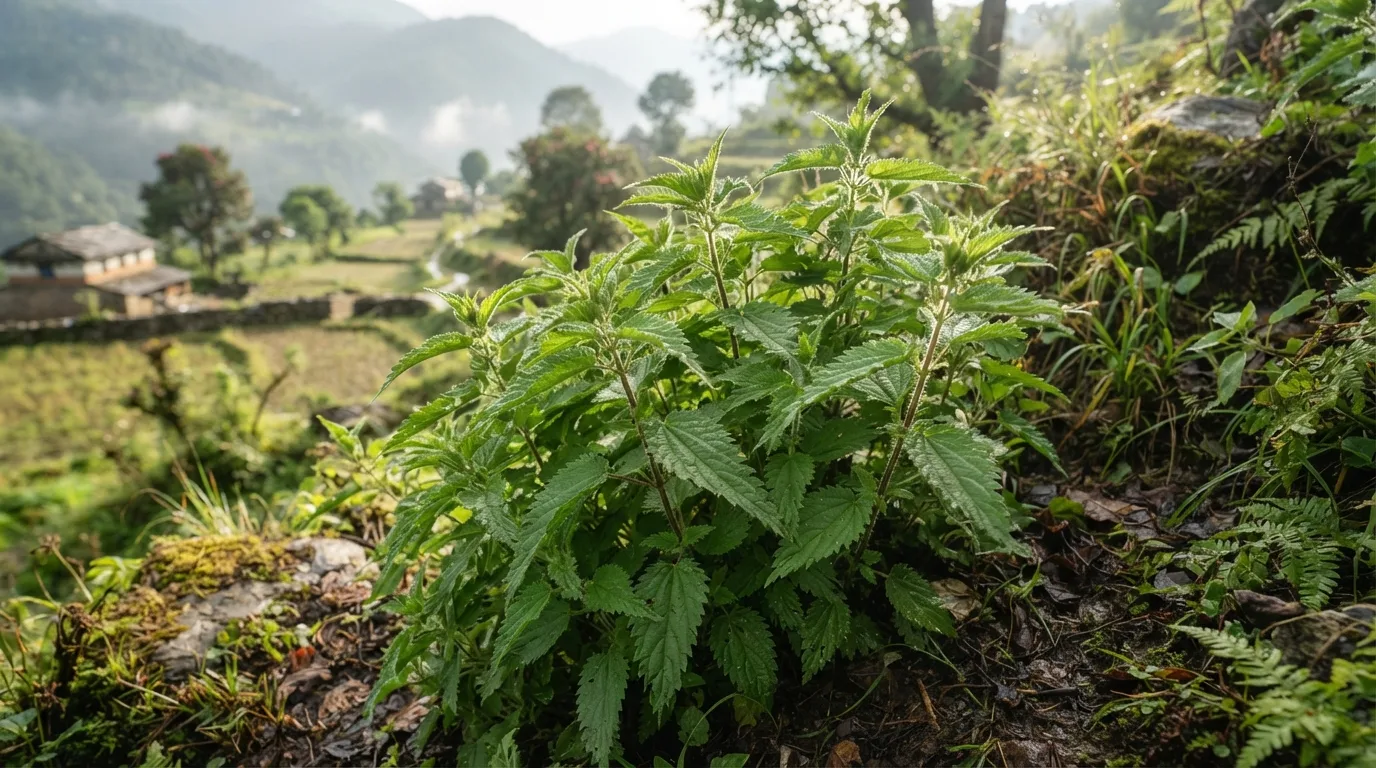
Sisnu is commonly called stinging nettle in English. It is a leafy plant that belongs to the nettle group of plants and is recognized by the tiny hairs found on its leaves and stems.
The name “stinging nettle” comes from the sensation caused when the fresh plant is touched. These tiny hairs can produce a sharp stinging or burning feeling, followed by itching or discomfort.
This is one of the most distinctive characteristics of the stinging nettle plant. Although it can sting when handled raw, the plant can be prepared as an edible leafy green after proper processing and cooking.
What Is the Stinging Nettle Plant Like?
Sisnu grows in a bush-like form rather than usually becoming a very large or tall plant. Several stems can grow together and gradually form a dense patch.
The leaves and stems are covered with tiny hairs that can cause a stinging sensation when they come into contact with bare skin. Because of this, harvesting sisnu requires more care than picking ordinary leafy vegetables.
Traditionally, people use tongs or other tools to collect the plant instead of grabbing it directly with their hands.
This unusual characteristic makes sisnu particularly memorable. A plant that can be uncomfortable to touch when fresh can become a soft and flavorful green after it has been properly prepared.
Sisnu in Nepali Cuisine
Sisnu has long been an important part of traditional Nepali cuisine, particularly in the Himalayan and hilly regions.
One of the best-known combinations is kodo ko dhido and sisnu saag. Dhido is commonly prepared from grains or flours such as millet, buckwheat, or corn and can be served with leafy vegetables, lentils, pickles, and other traditional foods.
For many Nepali families, this combination represents the simplicity of traditional food. Before modern packaged foods became common, locally available grains, vegetables, and wild edible plants formed an important part of everyday meals.
Sisnu was one of these locally available foods.
Today, sisnu ko saag has also become popular beyond the communities where it was traditionally eaten. Restaurants serving traditional Nepali food often include dhido and sisnu among their offerings, allowing both Nepali diners and visitors to experience this distinctive part of Nepal’s food culture.
When Does Sisnu Grow?
Sisnu is particularly abundant during the rainy season, when growing conditions are favorable and the plant can develop well.
Unlike many vegetables that require carefully prepared farmland, the stinging nettle plant is relatively hardy and can grow naturally in suitable environments. Traditionally, sisnu was often collected rather than intensively cultivated.
This made it accessible to rural communities that could gather it from areas around their homes, farms, and forests.
In more recent times, people have also started growing sisnu in kitchen gardens and agricultural areas. This represents an interesting change from wild collection toward home cultivation and wider use.
Is Sisnu Good for Health?
Like other green leafy vegetables, sisnu can contribute useful nutrients to a balanced and varied diet.
Sisnu is known to contain nutrients including iron, fiber, vitamins, minerals, and other plant compounds. Its nutritional value is one reason the plant has traditionally been considered a nourishing green vegetable.
However, it is important to understand that eating sisnu should be considered part of an overall healthy diet rather than a treatment for a particular illness or nutritional deficiency.
People with conditions such as diagnosed iron deficiency or other health problems should follow appropriate medical advice instead of relying on a single food.
What Are the Health Benefits of Sisnu Saag?
The potential health benefits of sisnu saag are mainly related to its nutritional composition.
As a leafy green, sisnu can provide nutrients and plant compounds that contribute to a varied diet. Traditionally, it has been eaten alongside grains such as millet, buckwheat, and corn, creating meals that combine different types of foods and nutrients.
The plant has also attracted scientific and nutritional interest because of the compounds naturally found in nettles. However, research on specific health effects should not be interpreted as proof that sisnu can treat or cure diseases.
Therefore, the best way to view the health benefits of sisnu is as part of its overall nutritional and culinary value.
Traditional Beliefs About Sisnu
Sisnu has traditionally been valued not only as a vegetable but also as a plant associated with general health and strength.
Older generations often placed great importance on naturally grown green vegetables and locally produced grains. Freshly collected sisnu, prepared at home, was considered a wholesome traditional food.
Various traditional beliefs have also associated nettle with benefits related to blood pressure, blood sugar, circulation, heart health, weakness, and other health concerns. Sisnu has additionally been used in dried forms and traditional herbal preparations.
These traditional uses are an important part of the cultural history of sisnu. However, traditional use should not automatically be considered proof of a medical treatment. More research is needed to determine the effectiveness and safety of specific nettle preparations for particular health conditions.
For this reason, sisnu can be appreciated both as a traditional Nepali food and as a plant of nutritional and cultural interest.
How Is Sisnu Harvested?

Harvesting fresh sisnu is different from harvesting most ordinary leafy vegetables.
The leaves and stems of the stinging nettle plant contain tiny hairs that can cause burning, itching, or a stinging sensation when they touch the skin.
For this reason, people traditionally use tongs or other tools to collect sisnu. Careful handling is especially important when harvesting larger quantities.
This unusual harvesting process is one of the most interesting parts of the story of sisnu. The same plant that needs careful handling when raw becomes a familiar leafy vegetable after proper preparation.
How Is Sisnu Prepared?

Proper preparation is particularly important when cooking sisnu because of its natural stinging hairs.
After harvesting, the plant is carefully cleaned and washed. It is then cooked thoroughly, traditionally by placing it in boiling water and allowing it to soften.
Cooking helps remove the irritating effect associated with the raw plant and transforms it into an edible green vegetable.
Once properly cooked, sisnu can be prepared like other leafy vegetables and served as sisnu ko saag.
The cooked greens have a distinctive flavor and pair especially well with traditional foods such as dhido.
Because raw sisnu can cause skin irritation, proper preparation and cooking are important before eating it.
Sisnu Powder and Dried Sisnu

It does not always have to be eaten fresh.
The leaves can also be dried and ground into powder, allowing the plant to be stored for longer periods. Dried sisnu can be kept in a container and used later as a traditional food ingredient.
This method is particularly useful because fresh leafy vegetables may be seasonal and are not always available throughout the year.
Dried sisnu powder is also found in markets and is sometimes sent to people living in other parts of Nepal or abroad who want to continue enjoying traditional foods from home.
In addition to being used as food, dried nettle leaves are sometimes prepared as stinging nettle tea or other traditional herbal infusions.
Stinging Nettle Plant Uses
The traditional uses of the stinging nettle plant extend beyond eating fresh sisnu saag.
In Nepal, the plant has traditionally been prepared as a cooked leafy vegetable, dried for later use, ground into powder, and used in traditional preparations.
In other parts of the world, stinging nettle has also been used as a food ingredient, tea, and traditional herbal preparation.
The phrase stinging nettle plant benefits is therefore associated with both its nutritional value as a food and its traditional uses. However, specific medicinal claims should be considered carefully because traditional use does not necessarily establish a medical treatment.

What Are the Negative Side Effects of Nettle?
The most obvious effect of fresh nettle is its ability to sting.
Contact with the raw plant can cause temporary burning, itching, redness, or discomfort because of the tiny hairs on the leaves and stems.
This is why fresh sisnu should be handled carefully and properly prepared before eating.
People should also be cautious with concentrated herbal preparations or supplements made from nettle. Food use and medicinal use are not necessarily the same, and anyone considering nettle preparations for a health condition should seek appropriate professional advice.
Sisnu and Stinging Nettle Beyond Nepal
The growing interest in traditional and wild edible plants has brought attention to stinging nettle beyond the communities where sisnu has traditionally been eaten.
In several countries, stinging nettle is recognized as an edible plant and is used in foods, teas, and traditional herbal preparations.
This growing interest is a reminder that plants once considered ordinary or locally important foods can attract wider attention as people explore traditional diets, wild edible plants, and naturally sourced ingredients.
For Nepal, however, sisnu is not a newly discovered food. It has been part of traditional food culture for generations.
A Traditional Food That Requires Little Fuss
One of the interesting things about sisnu is that it can grow naturally in suitable environments without requiring the highly intensive cultivation associated with some crops.
For generations, people have collected the plant from areas around their homes, farms, and forests.
This makes sisnu an interesting example of a locally available food that could be gathered without complicated agricultural systems.
As awareness of traditional foods has grown, people have also started cultivating sisnu around homes and in gardens.
Sisnu in Modern Nepali Food Culture
The role of sisnu has changed over time.
In the past, it was strongly associated with rural, hilly, and Himalayan communities and traditional household meals. Today, sisnu saag is recognized more widely throughout Nepal.
Restaurants serving traditional Nepali cuisine often include dhido, sisnu, and other local foods on their menus. For many diners, these foods provide a connection to Nepal’s agricultural traditions and local food heritage.
What was once simply a familiar household vegetable can now be presented as a traditional culinary experience.
At the same time, dried sisnu powder allows people living far from their hometowns to continue enjoying this traditional food.
Why Sisnu Still Matters
Sisnu represents something important about traditional Nepali food: many nutritious foods did not come from supermarkets or imported ingredients. They came from the land around people’s homes, farms, forests, and villages.
Generations of Nepali families learned how to identify, harvest, prepare, cook, and preserve these plants.
Sisnu is a particularly interesting example because of its unusual nature. It stings when handled raw, requires careful preparation, and yet becomes a flavorful green vegetable when properly cooked.
Its traditional pairing with dhido, use as dried sisnu powder, and growing presence in restaurants show how an old food can continue to find a place in modern diets.
Frequently Asked Questions About Sisnu
What is sisnu called in English?
Sisnu is commonly called stinging nettle in English. The name refers to the tiny hairs on the plant that can cause a stinging or burning sensation when touched.
What is sisnu saag?
Sisnu saag is a traditional Nepali leafy-green dish prepared from properly cooked sisnu, or stinging nettle. It is especially well known as an accompaniment to dhido and other traditional foods.
Is sisnu good for health?
Sisnu can be a nutritious addition to a varied diet because it contains nutrients such as iron, fiber, vitamins, minerals, and other plant compounds. It should be considered a food rather than a treatment for a specific disease.
What are the health benefits of sisnu saag?
The potential health benefits of sisnu saag are related primarily to its nutritional content. As with other leafy greens, it can contribute nutrients and plant compounds to a balanced diet.
What does stinging nettle do to your body?
Fresh stinging nettle can cause temporary stinging, itching, burning, or redness when it touches the skin. Once properly prepared and cooked, sisnu can be eaten as a leafy green.
Can sisnu be eaten raw?
Fresh sisnu should not be casually eaten raw because its tiny stinging hairs can cause irritation. Proper handling, preparation, and cooking are important before consuming it.
Can sisnu be dried?
Yes. Sisnu leaves can be dried and stored for later use. Dried leaves can also be ground into sisnu powder and used as a traditional food ingredient.
Can sisnu be made into tea?
Dried nettle leaves are sometimes used to prepare stinging nettle tea or traditional herbal infusions. However, herbal tea should not be treated as a substitute for medical treatment.
Final Thoughts
Sisnu, or stinging nettle, is much more than a plant with tiny stinging hairs. It is a traditional Nepali green that carries a connection to Himalayan food culture, rural life, locally available ingredients, and generations of traditional knowledge.
From being collected from the wild and cooked alongside dhido to being grown in home gardens, dried into powder, served in restaurants, and prepared as tea, sisnu has found many ways to remain part of Nepali food culture.
Its nutritional value, distinctive preparation, and cultural history make sisnu saag an interesting traditional food worth learning about.
For those who enjoy discovering traditional foods, sisnu is a reminder that some of the most meaningful foods are not necessarily the most complicated ones. They are often the foods that have been passed down from one generation to the next.


