
Table of Contents
Health Benefits of Raw Banana: Nutrition, Uses and Recipes

Raw bananas, also called green or unripe bananas, are an important cooking ingredient in many Nepali households. Unlike ripe bananas, raw bananas are firm, starchy, and usually cooked before eating. They can be used to prepare curry, pickle, pakoda, momo, roti, and other homemade dishes.
For generations, banana plants and fruits have had a place in Nepali homes, farms, celebrations, religious ceremonies, and everyday meals. Learning about the health benefits of raw banana also helps us understand why this simple food continues to be valued.
What Is Raw Banana?
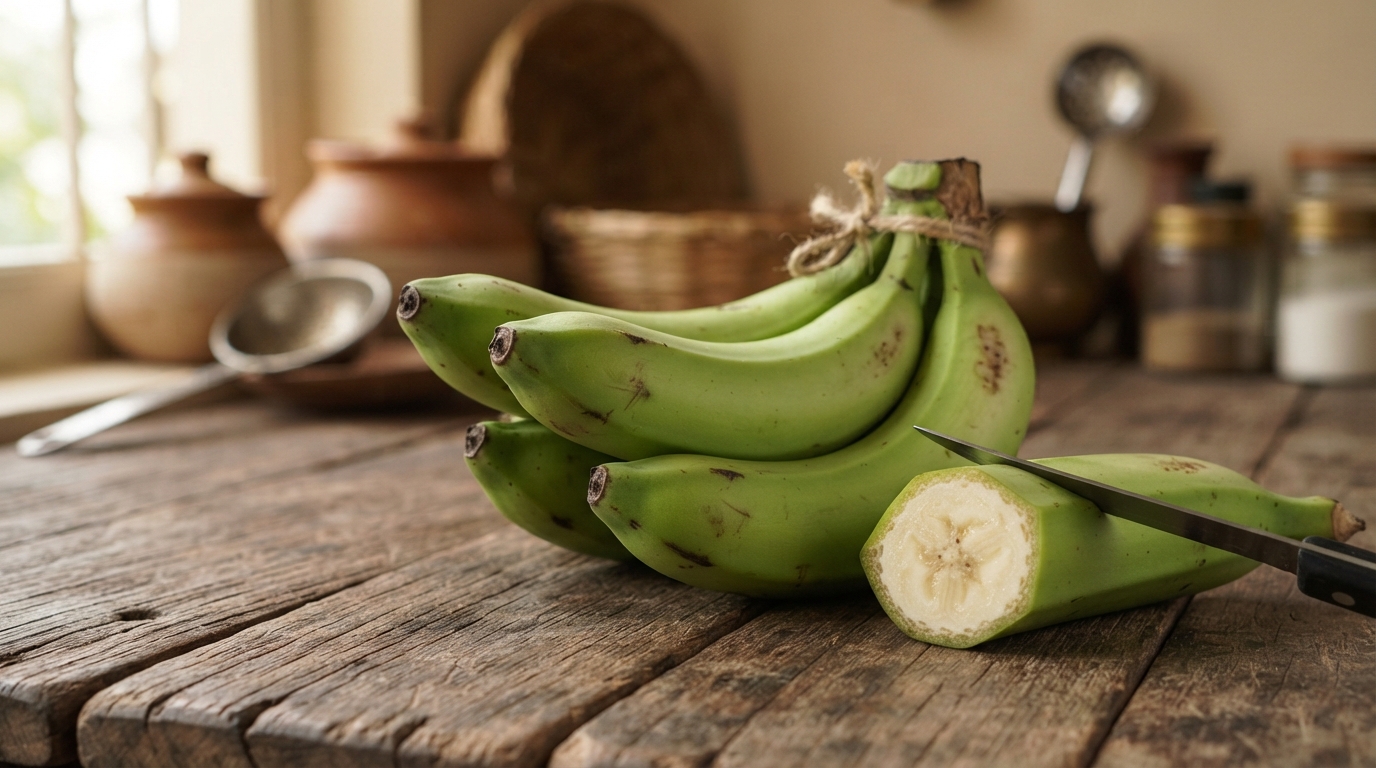
Raw banana is the unripe stage of the banana fruit. It has a green peel, firm flesh, and a less sweet taste than a ripe banana. Because it is starchy and can be slightly astringent, many people prefer to cook it instead of eating it like a ripe banana.

The health benefits of raw banana are closely connected with its starch, fiber, vitamins, minerals, and the way it is prepared. Green bananas can contain resistant starch, although the amount changes as the banana ripens. Resistant starch is not digested in the small intestine in the same way as ordinary starch and can be fermented by gut bacteria.
Health Benefits of Raw Banana
The health benefits of raw banana make it an interesting addition to a balanced diet. Raw banana provides carbohydrate for energy and contains fiber and several micronutrients. It is not a miracle food, but it can be a nutritious ingredient when prepared with sensible amounts of oil, salt, and spices.
1. It Provides Useful Carbohydrates and Resistant Starch
One of the notable features of green bananas is their starch content. Some of this starch is resistant starch, particularly when the banana is still unripe. Resistant starch reaches the large intestine and can be used by beneficial gut bacteria.
This is one reason the health benefits of raw banana are often discussed in relation to digestion and satiety. However, the amount of resistant starch depends on ripeness and cooking method, so we should not assume that every raw-banana dish has the same nutritional effect.
2. It Can Contribute Dietary Fiber
Fiber is important for normal digestion and bowel health. Raw banana can contribute fiber to the diet, especially when included alongside vegetables, legumes, whole grains, and other plant foods.

For people who are increasing fiber, it is sensible to increase it gradually and drink enough water. A varied diet is more important than relying on one food.
3. It Can Be a Filling Food
Because raw banana is starchy and firm, a cooked serving can be satisfying. This can be useful as part of a balanced meal, especially when combined with vegetables and a protein source such as beans, lentils, eggs, yogurt, or fish.
The health benefits of raw banana should therefore be considered as part of the whole meal rather than as a reason to eat unlimited amounts.
4. It Supplies Important Minerals
Bananas contain minerals such as potassium and small amounts of other micronutrients. Potassium is involved in normal muscle function, nerve signaling, and fluid balance.
However, people with kidney disease may be advised to limit potassium depending on their individual condition. Anyone with a kidney-related dietary restriction should follow advice from a qualified health professional rather than changing their diet based only on a general article.
5. It Can Be Part of a Balanced Diet
Raw banana is versatile and can replace or complement other starchy vegetables in meals. It can be boiled, steamed, curried, or used in snacks.
These health benefits of raw banana do not mean that raw banana is automatically healthier than every other vegetable. Variety is still important. A healthy plate can include vegetables, whole grains, legumes, protein foods, and fruit.
Raw Banana Nutrition
Understanding the health benefits of raw banana starts with understanding what is in the fruit before it ripens.

Raw banana nutrition varies according to banana variety, size, ripeness, and cooking method. Green bananas generally contain more starch and less sugar than fully ripe bananas. As bananas ripen, some of their starch is converted into sugars, which changes their taste and texture.
You can also use our recipe nutrition calculator to estimate the calories, protein, carbohydrates, fat, and fiber in homemade recipes.
Raw banana also contains fiber and minerals, including potassium. It does contain some protein, but it is not a high-protein food. If you want a protein-rich meal, combine raw banana with lentils, beans, eggs, dairy, fish, or another suitable protein source.
The health benefits of raw banana are therefore better understood as part of its overall nutritional profile rather than as a single nutrient effect.
Is Raw Banana Good for Diabetes?
When considering the health benefits of raw banana for blood-sugar-conscious meals, preparation and portion size are especially important.
People with diabetes often ask whether raw banana is a better choice than a ripe banana. Green bananas generally contain less sugar and more resistant starch than ripe bananas, but this does not mean that they are carbohydrate-free or suitable in unlimited quantities.
The health benefits of raw banana for a person with diabetes depend on the person’s overall diet, portion size, cooking method, medications, and individual blood-glucose response. A boiled or lightly cooked preparation may be very different from a deep-fried preparation.
If you have diabetes, pay attention to portion size and consider eating raw banana with other nutritious foods. If you take diabetes medication or have difficulty controlling blood glucose, discuss your food choices with your healthcare professional.
Can I Eat Raw Bananas Every Day?
The health benefits of raw banana can fit into a varied eating pattern without requiring daily consumption.
There is no universal rule that everyone should eat raw banana every day. For many healthy people, a reasonable serving can fit into a varied diet.
The health benefits of raw banana can be enjoyed without making it a daily requirement. You can alternate it with other vegetables, grains, legumes, and fruits so that your diet remains diverse.
People who experience digestive discomfort after eating a large amount should reduce the portion and see how their body responds. Preparation also matters because heavily fried raw banana dishes are different from boiled or lightly cooked preparations.
Can I Eat Raw Bananas on an Empty Stomach?
Some people prefer eating bananas in the morning, but raw banana is usually not eaten like a ripe banana because of its firm texture and starchy, astringent character. It is generally more suitable when cooked as part of a meal.
There is no strong reason for most healthy people to believe that raw banana must be eaten on an empty stomach to obtain the health benefits of raw banana. A person’s overall dietary pattern matters much more than a specific eating time.
Is Raw Banana High in Sugar?
Raw banana is generally less sweet and contains less sugar than a fully ripe banana because much of its carbohydrate is still present as starch. During ripening, some starch changes into sugars, which makes the fruit sweeter.

That does not mean raw banana contains no carbohydrate. People managing diabetes or carbohydrate intake should still consider portion size and the ingredients used in the final dish.
Does Raw Banana Contain Potassium?
Yes, bananas contain potassium, although the exact amount varies with variety, size, and ripeness. Potassium is an essential mineral involved in several normal body functions.
The health benefits of raw banana should not be interpreted as a recommendation for people with kidney disease to eat large amounts of banana. Some people with reduced kidney function need to limit potassium, so individualized medical advice is important.
Does Raw Banana Have Protein?
Raw banana contains a small amount of protein, but it should not be considered a major protein source. If your goal is to make a meal more protein-rich, combine raw banana with foods such as lentils, beans, eggs, yogurt, or other suitable protein foods.
Is It Better to Eat Bananas Raw or Cooked?
This depends on which type of banana you mean. Ripe bananas are commonly eaten raw because they are soft and sweet. Raw green bananas are usually cooked because they are firm and starchy.
Cooking can change texture and some nutrients, while the addition of oil, salt, sugar, or other ingredients changes the overall nutritional value of the dish. Therefore, the health benefits of raw banana should be considered together with the cooking method.
Boiled or steamed raw banana can be a simple option. Deep-fried dishes such as chips and pakoda can still be enjoyed occasionally, but they are higher in fat and calories than boiled preparations.
Raw Banana Recipes

The health benefits of raw banana can be enjoyed through simple homemade recipes rather than complicated preparations.
One of the biggest advantages of raw banana is its versatility. In Nepal and other South Asian kitchens, it can be turned into several tasty dishes.
Raw Banana Curry
Raw banana curry can be made with boiled or unboiled banana. Peel it if desired, cut it into pieces, and cook it with oil, cumin or other spices, turmeric, chili, salt, and suitable herbs. It can be made dry or with a light gravy.

The health benefits of raw banana curry depend on the ingredients and cooking method. A curry prepared with moderate oil and plenty of spices and vegetables can be part of a balanced meal.
Raw Banana Curry Recipe
For a simple home-style raw banana curry, wash the bananas and cut them into pieces. They may be boiled first for about 15–20 minutes until tender, then peeled and cut, or they can be peeled and cooked directly depending on the variety.
Heat a small amount of oil in a pan. Add cumin and other preferred spices, followed by the banana pieces and salt. Add a little water if a gravy is desired. Cover and cook until the banana is tender and the flavors come together.
This simple raw banana curry recipe can be adjusted according to family taste. Potatoes, beans, peas, or other vegetables can also be added, although people with specific dietary restrictions should choose ingredients according to their needs.
Raw Banana Pickle
Raw banana can also be used to make a simple pickle. First, boil the banana in water until it becomes tender but not mushy. This may take around 15–20 minutes depending on its size and variety.
After cooling, cut the banana into small pieces. It can be prepared peeled, or the peel can be retained if it is clean, tender, and suitable for eating. Add salt, chili, sesame powder, flaxseed powder, or other preferred pickle spices. Lemon juice or another suitable sour ingredient can provide acidity.
For a milder pickle, use less chili and more lemon juice according to taste. Homemade pickles should be prepared hygienically and stored appropriately rather than kept at room temperature for long periods without proper preservation.
Raw Banana Pakoda
Raw banana pakoda is another popular way to use green bananas. Wash and peel the banana, then slice it into round pieces.
Prepare a thick batter using gram flour, salt, cumin, chili powder, and other preferred spices. A little rice flour or semolina can be added for extra crispness. Dip the banana slices in the batter and fry until cooked and crisp.
Because pakoda is fried, it is best enjoyed occasionally rather than treated as a daily health food. The health benefits of raw banana do not make a deep-fried snack equivalent to boiled banana.
Raw Banana Momo
Raw banana can also be grated and used as a filling for momo. Grate or finely shred the cooked or suitable raw banana and mix it with spices and other vegetables such as grated radish, cabbage, or cooked potato if desired.
Fill momo wrappers with the mixture and steam until cooked. This is a creative way to turn a familiar local ingredient into a popular snack.
Raw Banana Roti
Raw banana can also be mashed and combined with suitable flour and spices to prepare a simple roti. Boil the banana until soft, mash it, and mix it with flour, salt, and preferred seasonings. Knead into a dough, shape into flat rounds, and cook on a hot pan.
Banana Flower or Bungo Pickle (Aachar)
The banana flower, known in many Nepali households as bungo, grows below the developing bunch of bananas. It can also be used as a vegetable or pickle ingredient.
To prepare a pickle, remove unwanted outer layers and finely slice the tender flower. Lightly steam or boil it rather than overcooking it. Banana flower can have a slightly bitter or astringent taste, so light cooking and rinsing can make it more pleasant.
After cooling and squeezing out excess water, mix it with salt, chili, pickle spices, and lemon juice or another suitable sour ingredient. It can also be combined with raw banana or other vegetables.
Are Banana Chips Made From Raw Banana?
Yes, many banana chips are made from unripe green bananas. The bananas are sliced thinly and then fried or otherwise processed.
Although banana chips start with raw banana, the finished snack is nutritionally different from boiled or lightly cooked banana because frying adds oil and increases energy density. For regular meals, boiled, steamed, or lightly cooked preparations may be more suitable.
Raw Banana Disadvantages and Things to Consider
A balanced view of the health benefits of raw banana should include both its advantages and practical limitations.
Raw banana is generally a useful food, but no single food is perfect for everyone. Large portions may cause digestive discomfort in some people, particularly if they are not accustomed to a high-fiber or resistant-starch intake.
Some preparations can also be less healthy than the banana itself. Deep frying, excessive salt, and heavy sauces can significantly change the nutritional profile of a dish.
The health benefits of raw banana should therefore be considered alongside portion size, cooking method, and the rest of the diet.
People with kidney disease, diabetes, or another condition requiring a specific diet should follow individualized advice from their healthcare professional.
Traditional Importance of Banana in Nepal
Banana has a special place in many Nepali communities. Banana plants are traditionally used during religious ceremonies, puja, weddings, and other cultural occasions. The plant itself can become part of decorations and ceremonial arrangements.
Bananas are also commonly offered to guests because they are easy to serve and do not require preparation. Ripe bananas are soft and easy to eat, which makes them convenient for children and older adults who may have difficulty chewing harder foods.
In traditional households, banana is valued not only as a fruit but also because different parts of the plant can be used. Raw fruit can become a vegetable or pickle, ripe fruit can be eaten as a snack, and the flower can be cooked or pickled.
These cultural uses help explain why the health benefits of raw banana are only one part of the story. Banana has agricultural, culinary, cultural, and household importance as well.
Ripe Banana and Its Uses
Ripe banana is different from raw banana in taste, texture, and carbohydrate composition. As the fruit ripens, it becomes softer and sweeter, making it convenient for eating without cooking.

Ripe bananas can be served as a quick snack, included in breakfast, blended into smoothies, or offered to guests. They are also easy for young children and older adults to chew.
Bananas can be useful when someone needs a convenient source of carbohydrate, but individual dietary needs vary. People managing diabetes or another condition should consider portion size and their overall meal pattern.
Final Thoughts
Raw banana is much more than an ordinary green fruit. It is a versatile ingredient that can be cooked as curry, pickle, pakoda, momo, or roti, and its flower can also be used in traditional dishes.
The health benefits of raw banana are mainly related to its nutritional composition, including starch, resistant starch in the unripe fruit, fiber, and minerals. However, the benefits depend on the amount eaten and how it is prepared.

For most people, the best approach is simple: enjoy raw banana as part of a varied diet, choose lighter cooking methods more often, and avoid treating any single food as a cure for a health condition.
Frequently Asked Questions
What are the health benefits of raw banana?
The health benefits of raw banana include its contribution of starch, resistant starch in unripe fruit, fiber, potassium, and other nutrients. It can be a filling and versatile ingredient when prepared as part of a balanced diet.
Is raw banana good for diabetes?
The health benefits of raw banana may make it an interesting food choice, but diabetes management still depends on the whole diet and individual needs.
Raw banana contains less sugar and more resistant starch than a ripe banana, but it still contains carbohydrate. People with diabetes should consider portion size, preparation, and their individual blood-glucose response.
Can I eat raw bananas every day?
Many healthy people can include raw banana regularly, but eating it every day is not necessary. A varied diet that includes different vegetables, fruits, grains, legumes, and protein foods is preferable.
Is raw banana good for the kidneys?
Raw banana contains potassium. Whether it is appropriate for someone with kidney disease depends on their kidney function and dietary requirements. People with kidney disease should follow their healthcare professional’s advice about potassium intake.
Does raw banana have protein?
Yes, it contains some protein, but not enough to be considered a major protein source. Pairing it with beans, lentils, eggs, dairy, or another protein food can make a meal more balanced.
Are banana chips made from raw banana?
Many banana chips are made from unripe green bananas. However, because they are commonly fried, they are higher in fat and calories than boiled or steamed banana.
What is the best way to eat raw banana?
Boiling, steaming, or lightly cooking raw banana can be a simple option. It can also be prepared as curry, pickle, pakoda, momo, or roti according to local taste and dietary needs.


