
Table of Contents
Introduction to Buckwheat (Fapar)
Buckwheat, locally known as fapar, is a traditional food crop that has been grown and eaten in Nepal for generations. Although its name contains the word “wheat,” buckwheat is not wheat and does not belong to the same plant family. It is a pseudocereal that is naturally gluten-free and can be used in flour, roti, dhido, porridge, tea and other traditional foods.
In Nepal, fapar is especially connected with the food traditions of the hills and mountains, where it has long been valued as a practical crop and source of food. Today, interest in buckwheat is growing because of its nutritional profile and its versatility as an alternative to commonly eaten cereal foods.
But what exactly is buckwheat, what are its benefits, and how can it be included in the diet? This guide explores buckwheat benefits, nutrition, weight loss, flour, traditional Nepali foods, cultivation, preparation, side effects and its importance in Nepal.
What Is Buckwheat (Fapar)?
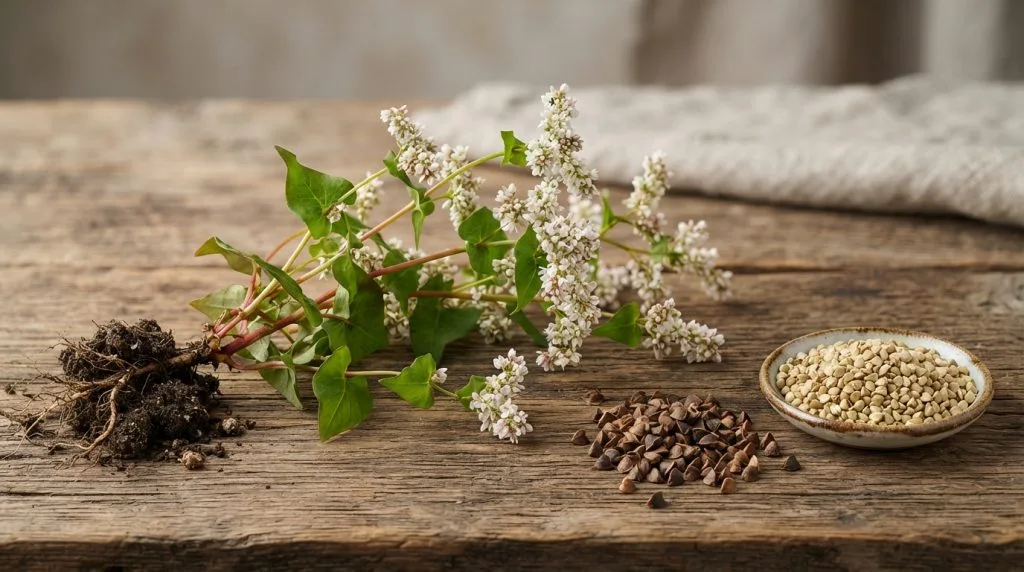
Buckwheat is a flowering plant scientifically classified in the genus Fagopyrum. Unlike wheat, rice and other true cereal grains, it is considered a pseudocereal. Its seeds are used much like cereal grains, even though the plant belongs to a different botanical family.
It is also naturally gluten-free, which makes it useful in gluten-free diets when it is processed and prepared without gluten-containing ingredients or cross-contamination.
In Nepal, two cultivated types are commonly described:
- Mithe fapar — common or sweet fapar, generally associated with relatively warmer areas.
- Tite fapar — bitter or Tartary fapar, traditionally associated with colder and higher-elevation areas.
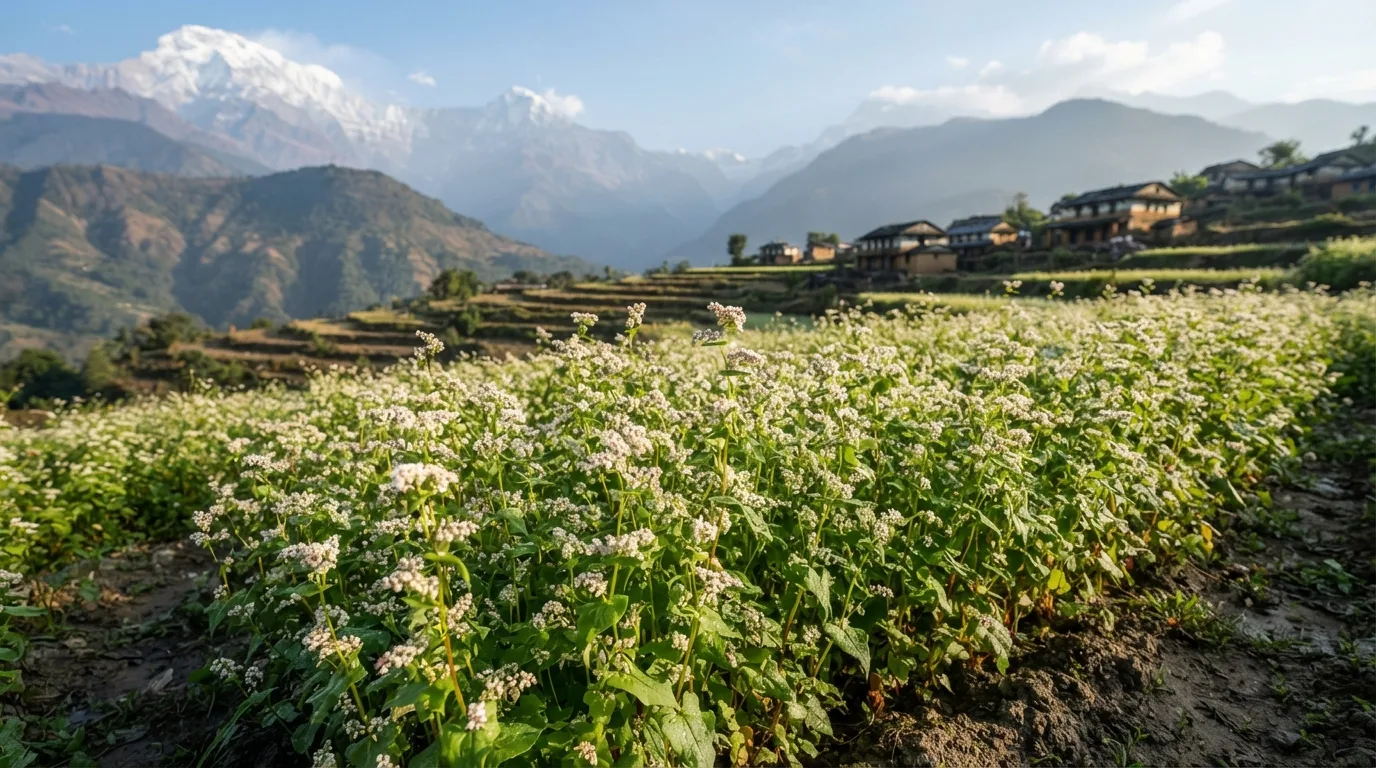
Nepal’s agricultural information sources describe fapar cultivation from the Terai to high mountain areas, with particularly diverse cultivation reported in districts including Dolpa, Mustang, Jumla, Manang and Solukhumbu.
Importance of Buckwheat in Nepal
Fapar is more than a health food in Nepal. It is also part of the country’s traditional agricultural and food culture.
Historical agricultural research in Nepal describes fapar as an important crop in the high hills, with both common and Tartary fapar cultivated for a long time. The crop has also been the subject of research by the Nepal Agricultural Research Council and other agricultural programs.
One reason this food is valuable to farmers is its adaptability. Nepalese agricultural sources describe it as a crop that can be grown under diverse conditions and in areas where other crops may be less suitable.
For many communities, fapar can therefore contribute to both food diversity and agricultural resilience.
Buckwheat Cultivation in Nepal
Buckwheat has a long history of cultivation in Nepal, and its growing conditions vary according to the type and location.
Nepalese agricultural information describes it’s cultivation from lowland areas to high mountain elevations. Tartary fapar is particularly associated with higher elevations, while common fapar can be cultivated across a wider range of environments.

When Is Buckwheat Planted?
The appropriate planting period depends on elevation, climate and the type of buckwheat being grown.
In different parts of Nepal, it can be grown as a summer, autumn or winter crop. Historical Nepalese agricultural research describes Tartary fapar as particularly important in higher elevations, while common fapar is grown in different seasons depending on altitude.
What Soil Is Suitable for Buckwheat?
Buckwheat is generally adaptable and can grow in relatively poor soils. Nepalese agricultural guidance notes that very fertile soil can sometimes encourage excessive vegetative growth and lodging, while waterlogged or unsuitable heavy soils can interfere with establishment.
A Nepal government agricultural source notes that it can tolerate acidic conditions and gives a pH range around 5–6 as suitable.
How Is Buckwheat Grown?
Buckwheat cultivation generally involves:
- Preparing the field.
- Selecting suitable seed.
- Sowing according to local climate and elevation.
- Maintaining appropriate moisture.
- Controlling competing weeds when necessary.
- Allowing the crop to flower and develop seeds.
- Harvesting when the grain has sufficiently matured.
- Drying, cleaning and processing the harvested grain.
The exact cultivation practices should be adapted to local conditions and agricultural recommendations rather than following one universal planting schedule.
When Is Buckwheat Harvested?
Harvesting time depends on the variety, planting date, altitude and local weather.
Farmers generally harvest when a substantial portion of the seeds has matured. After harvesting, the crop needs to be properly dried and cleaned before the grain is stored or processed into flour.
Nepal’s agricultural research institutions have published dedicated material on improved fapar cultivation and production technology, reflecting the importance of the crop within Nepalese agriculture.
Buckwheat Nutrition
Buckwheat is valued nutritionally because it contains a combination of protein, dietary fiber, minerals and bioactive plant compounds. Reviews of this food research describe it as a nutrient-rich pseudocereal containing proteins, fibers, vitamins, minerals and flavonoid compounds.
The nutritional composition varies according to the variety, growing conditions and whether you are eating whole fapar, groats, flour or a prepared food.

Is Buckwheat High in Protein?
Buckwheat provides a useful amount of plant protein compared with many commonly consumed cereal foods.
Research reviews also note that this healthy food’s protein contains essential amino acids, including lysine, which is relatively limited in many cereal grains.
However, calling buckwheat a “high-protein food” should not mean treating it as a replacement for every major protein source. A balanced diet can include it alongside legumes, dairy, eggs, meat, fish, nuts or other protein-rich foods depending on dietary preferences.
Buckwheat Benefits for Women
It can be part of a nutritious diet for women because it provides fiber, protein and various micronutrients and plant compounds.
However, there is no reason to treat it as a food that produces completely different health effects in women compared with men. Its nutritional value is relevant to anyone who includes it in a balanced diet.
For women who are trying to manage their weight, replacing highly refined foods with satisfying, fiber-containing meals that include foods such as buckwheat may be useful as part of an overall eating pattern. The grain itself should not be considered a weight-loss treatment.
Buckwheat Benefits for Men
The same basic nutritional advantages apply to men. It provides plant protein, dietary fiber and other nutrients that can contribute to a varied diet.
Its protein content can also make this grain useful as one component of meals where people want to increase the variety of plant foods they eat.
Can Buckwheat Benefit Skin Health?
It contains various bioactive compounds, including flavonoids and other phytochemicals. Research has investigated antioxidant and other biological properties of these compounds.
However, it would be inaccurate to say that eating it directly improves everyone’s skin or treats skin problems.
Healthy skin depends on many factors, including overall nutrition, hydration, sleep, sun exposure, genetics and underlying health conditions. It can contribute nutrients to a healthy diet, but it should not be presented as a specific skin treatment.
What Are the Benefits of Buckwheat?
It has attracted attention because of its nutritional composition and naturally occurring plant compounds.
1. Provides Dietary Fiber
It contains dietary fiber, which contributes to a healthy eating pattern. Fiber is important for normal digestive function and can help add bulk to the diet.
2. Provides Plant Protein
It contributes plant protein and contains a useful amino-acid profile.
3. Contains Minerals and Other Nutrients
It provides several minerals and nutrients, although the exact amount depends on the variety and form consumed.
4. Contains Bioactive Plant Compounds
It contains compounds such as flavonoids and rutin that have been studied for their biological activity.
5. Naturally Contains No Gluten
This grain itself is naturally gluten-free. This makes it a useful grain alternative for people following gluten-free diets, although people with celiac disease should still pay attention to cross-contamination during processing.
6. Can Add Variety to the Diet
It can be eaten in many forms, including flour-based foods, whole cooked grain, traditional Nepali dishes and beverages.
That variety may be one of its greatest practical advantages. Combining buckwheat with other traditional staple crops such as exploring the benefits of finger millet allows households to create diverse, nutrient-rich daily meals.
Is Buckwheat Good for Weight Loss?
This is one of the most common questions about this healthy food.
The answer is more nuanced than simply saying “buckwheat causes weight loss.”
It can fit into a weight-conscious diet because it provides fiber and protein and can be used in place of some refined or less nutrient-dense foods. But eating it alone does not automatically cause weight loss.
Research examining this food and cardiometabolic health has found promising areas of interest, but human evidence remains limited and results are not strong enough to describe it as a weight-loss treatment. One systematic review and meta-analysis found no significant overall effect on body weight in the studies included.
Therefore, the overall meal, portion size, total calorie intake and lifestyle matter more than one individual food.
Can I Eat Buckwheat to Lose Weight?
Yes, it can be included in a weight-loss diet, but it should be viewed as one nutritious food rather than a special weight-loss remedy.
For example, a meal containing this food, vegetables and a suitable protein source may be more satisfying and nutritionally balanced than a meal dominated by refined carbohydrates.
The important point is not simply adding it to your normal diet. If large portions of this food are added without reducing overall energy intake, weight loss is not guaranteed.
How to Eat Buckwheat for Weight Loss
If your goal is weight management, consider:
- Choosing minimally processed food when practical.
- Using sensible portions.
- Pairing it with vegetables and protein.
- Limiting excessive oil, sugar and high-calorie toppings.
- Using it as part of a balanced meal rather than relying on it alone.
- Maintaining regular physical activity.
A roti cooked with a large amount of oil, for example, should not automatically be considered a low-calorie weight-loss food simply because it contains buckwheat.
Are Buckwheat Flour Benefits Helpful for Weight Loss?
It’s flour can be a nutritious flour choice because it retains many of the nutritional characteristics associated with this grain.
But it’s flour is still a calorie-containing food. Turning it into sweetened desserts, fried foods or very large portions can substantially change the nutritional profile of the final meal.
So the benefit comes from how the flour is used within the overall diet.
Can Buckwheat Tea Help With Weight Loss?
Tea made of it is often promoted online as a weight-loss drink.
There is not enough human evidence to claim that it’s tea by itself causes meaningful weight loss.
If an unsweetened tea replaces a high-calorie sugary beverage, it may help reduce overall calorie intake. That is different from saying that the tea itself burns body fat.
Is Buckwheat Better Than Rice for Weight Loss?
There is no universal answer.
This food and rice differ in their nutritional composition, preparation and portion sizes. The type of rice also matters; white rice, brown rice and other varieties are not nutritionally identical.
If it is used as an alternative to a refined carbohydrate and forms part of a balanced meal, it can be a useful option. But simply replacing rice with an equal or larger calorie portion of this food does not guarantee weight loss.
The better choice depends on the person’s overall diet, preferences, nutritional needs and portion sizes.
What Is the Best Way to Eat Buckwheat?
There is no single “best” way to eat this grain.
The best preparation is one that fits your nutritional needs, culture and eating habits.
Itcan be used as:
- Whole cooked fapar
- Buckwheat flour
- Fapar ko pitho
- Fapar ko roti
- Fapar ko dhido
- Buckwheat porridge
- Buckwheat pancakes
- Fapar tea
- Other traditional or modern preparations
Traditional preparation methods are particularly important in Nepal because fapar is not simply a modern health-food trend; it is part of existing food traditions.
Buckwheat Flour: Fapar Ko Pitho

Fapar ko pitho means buckwheat flour.
The grain is cleaned and milled to produce flour that can be used for a variety of foods. In Nepal, fapar ko pitho is traditionally used to prepare different dishes, particularly in communities where this grain has long been part of the local diet.
It’s flour has also become more widely recognized outside traditional communities because it can be used in gluten-free cooking.
However, gluten-free does not automatically mean low-calorie or healthier in every situation. The nutritional quality of the final food still depends on its ingredients and preparation.
Traditional Nepali Foods Made From Buckwheat
One of the most interesting aspects of fapar is how many different foods can be prepared from it.
Fapar Ko Roti

Fapar ko roti is a traditional flatbread made from it’s flour.
Depending on the local preparation, the dough and cooking method can vary. It can be eaten as part of a meal with vegetables, pickles, legumes or other accompanying foods.
Buckwheat Dhido
It’s flour can also be used to prepare fapar ko dhido.
Dhido is an important traditional Nepali food, particularly associated with hill and mountain culture. While buckwheat flour produces a distinct dhido, you can also read our guide on the benefits of finger millet to see how kodo flour is traditionally used for making dhido and other nourishing dishes.
A balanced dhido meal can be served with vegetables, lentils, greens, fermented foods or other traditional accompaniments.

Buckwheat Halwa and Other Foods
It’s flour can also be used in preparations such as halwa and other traditional or household foods.
The nutritional value of these foods depends not only on this grain but also on the amount of sugar, oil, ghee and other ingredients used.
Buckwheat Tea
It can also be prepared as a tea or roasted-grain beverage.
It’s tea can be consumed without added sugar, making it an alternative to sweetened beverages for people who enjoy its distinctive flavor.

Can I Replace Rice With Buckwheat?
You can include it instead of rice in some meals, but you do not necessarily need to completely eliminate rice.
Both foods can have a place in a varied diet.
The more useful question is:
Which combination of foods gives you the nutrients, satiety and portion size appropriate for your needs?
For example, a meal containing this grain, vegetables and a protein source can be nutritionally balanced. The same principle applies to a rice-based meal.
Replacing one staple with another is not automatically healthier if the overall meal remains unbalanced. Rotating buckwheat with other native grains, for example, incorporating the benefits of finger millet into your meal routine helps provide a broader array of essential minerals and dietary fiber.
What Happens If I Eat Buckwheat Every Day?
Eating this food every day can be perfectly compatible with a healthy diet for many people, provided it is eaten in appropriate portions and as part of a varied diet.
It provides fiber, protein and other nutrients, but eating only one staple food every day would unnecessarily reduce dietary variety.
A better approach is to rotate different nutritious foods and combine it with vegetables, legumes, fruits, nuts, seeds and suitable protein sources.
There is also no established rule saying that everyone needs to eat this grain every day.
Should I Soak Buckwheat Before Cooking It?
Whether this grain should be soaked depends on the form and recipe.
Whole buckwheat can be soaked before cooking in some preparations, while other recipes cook the grain directly. Soaking can affect cooking time and texture, but it is not a universal requirement.
For flour-based foods such as fapar ko roti or dhido, soaking the grain beforehand is generally not relevant because the grain has already been milled into flour.
Therefore, follow the preparation method appropriate for the particular food you are making.
Buckwheat Side Effects and Disadvantages
Although it is nutritious, it is not suitable for absolutely everyone.
Who Should Not Eat Buckwheat?
People with a known it’s allergy should avoid it and seek medical advice about safe food choices.
It’s allergy is uncommon compared with some major food allergies, but serious allergic reactions have been reported.
People with digestive problems or other medical dietary restrictions should also consider their individual circumstances rather than assuming that a food is suitable simply because it is considered healthy.
Can Buckwheat Cause Allergies?
Yes. It can cause allergic reactions in susceptible individuals. Symptoms can range from mild reactions to severe allergic reactions.
Anyone who develops symptoms such as swelling, difficulty breathing, widespread hives or other signs of a severe allergic reaction after eating this grain should seek urgent medical attention.
Is Buckwheat Gluten-Free?
Yes. Buckwheat itself is naturally gluten-free.
Despite its name, it is not a type of wheat. Harvard’s Nutrition Source lists it among naturally gluten-free whole-grain alternatives.
However, people with celiac disease should be careful about products that may have been processed alongside wheat or other gluten-containing grains.
Is Buckwheat a Superfood?
“Superfood” is a popular marketing term rather than a precise scientific classification.
It certainly has an interesting nutritional profile and contains protein, fiber, minerals and bioactive compounds. Research continues to investigate its potential health effects.
But calling it a superfood should not imply that it can replace a balanced diet or prevent and treat diseases by itself.
A better way to describe it is as a nutritious and versatile pseudocereal that can be part of a healthy diet.
Buckwheat vs Oats: Which Is Healthier?
Neither is universally “healthier.”
Buckwheat and oats have different nutritional characteristics. Research comparing their phytochemical profiles has found differences in their bioactive compounds; for example, it is notable for flavonoids such as rutin, while oats are particularly associated with beta-glucans.
The better choice depends on the rest of your diet and what you are trying to achieve.
Instead of treating buckwheat and oats as competitors, they can both be useful foods in a varied diet.
Buckwheat and Digestive Health
It contains dietary fiber and has been studied for its potential relationship with gastrointestinal health.
Research reviews have found promising findings in laboratory and animal studies, but human evidence remains limited. Researchers have specifically noted that more high-quality human trials are needed before strong conclusions can be made about it’s effects on gastrointestinal health.
Therefore, it is reasonable to include this high grain as a fiber-containing food, but claims that it can treat digestive diseases should be avoided.
Buckwheat in Traditional and Modern Food Culture
Buckwheat is one of several traditional grains used in Nepal. Kodo millet, another important traditional crop, also has a long history in Nepali food and agriculture. Fapar shows how traditional foods can remain relevant while also finding new uses.
In Nepal, it has historically been associated with highland agriculture and traditional foods. Today, fapar ko pitho and other products are also being incorporated into modern diets because of their nutritional characteristics and gluten-free nature.
This creates an interesting connection between traditional Nepali food knowledge and modern interest in nutritious foods.
Rather than abandoning traditional foods in favor of newly popular “health foods,” there is value in understanding the nutritional and cultural qualities of foods that have already been part of local diets for generations.
Why Fapar Still Matters

Fapar is important not only because of its nutritional value but also because it connects food, farming, culture and local biodiversity.
Nepal has several agro-ecological zones where this grain can be cultivated, and government agricultural sources document its cultivation from the Terai to high mountain regions.
Its relatively short growing period and adaptability have also contributed to interest in it as a useful crop.
For Nepal, preserving knowledge about crops such as fapar can therefore be valuable for both traditional food culture and agricultural diversity. Buckwheat can also be combined with other plant foods to create a more varied diet. Soybeans, for example, are another useful plant-based food that provides protein and other nutrients.
Final Thoughts on Buckwheat
Buckwheat, or fapar, is much more than an ingredient associated with modern health-food trends.
It is a traditional crop with a long history in Nepal, particularly in hill and mountain communities. It can be processed into fapar ko pitho, prepared as roti or dhido, used in other traditional foods, and incorporated into modern recipes.
Nutritionally, it provides protein, dietary fiber, minerals and bioactive plant compounds, and it is naturally gluten-free.
It may be a useful food for people interested in weight management because it can form part of a balanced, satisfying diet, but it should not be treated as a special weight-loss food. Current research does not justify promising that it alone causes weight loss.
For most people, the greatest value of this grain is its combination of nutrition, versatility, agricultural importance and cultural heritage.
And in Nepal, that makes fapar not just a food, but a part of the country’s traditional food and farming story.


