
Table of Contents
Discover Finger Millet Benefits & Traditional Kodo Uses
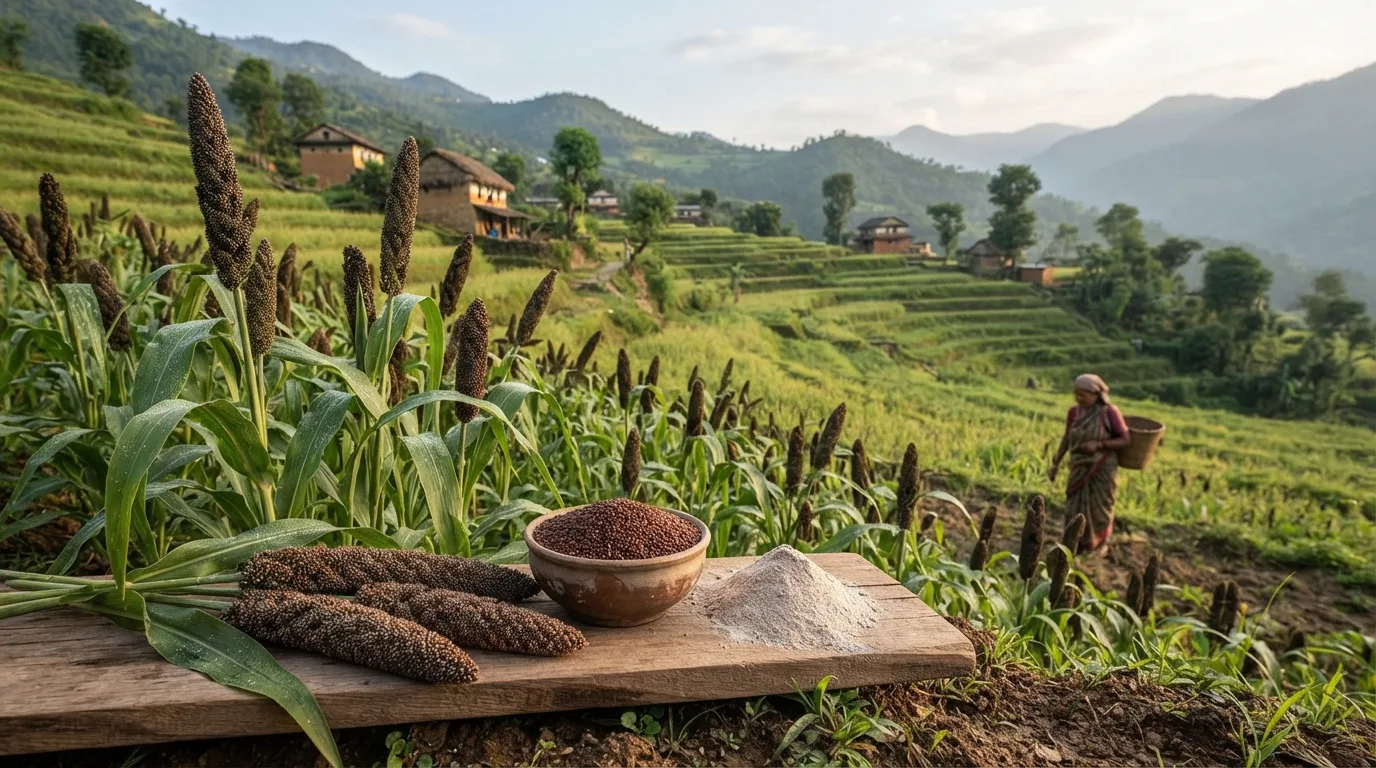
Finger millet, traditionally known as kodo in Nepal, is an important cereal crop connected with the country’s farming traditions and everyday food culture. For generations, farming households have grown kodo, processed its small grains, and used its flour to prepare traditional dishes such as kodo dhido and roti.
Beyond its cultural importance, finger millet provides carbohydrates, plant protein, dietary fiber, and minerals. It can be included in a varied diet and offers an alternative to more commonly eaten grains such as rice and wheat.
In this guide, we explore finger millet benefits, traditional kodo uses, cultivation practices in Nepal, nutritional value, and the role this traditional grain continues to play in Nepali food culture.
What Is Finger Millet?
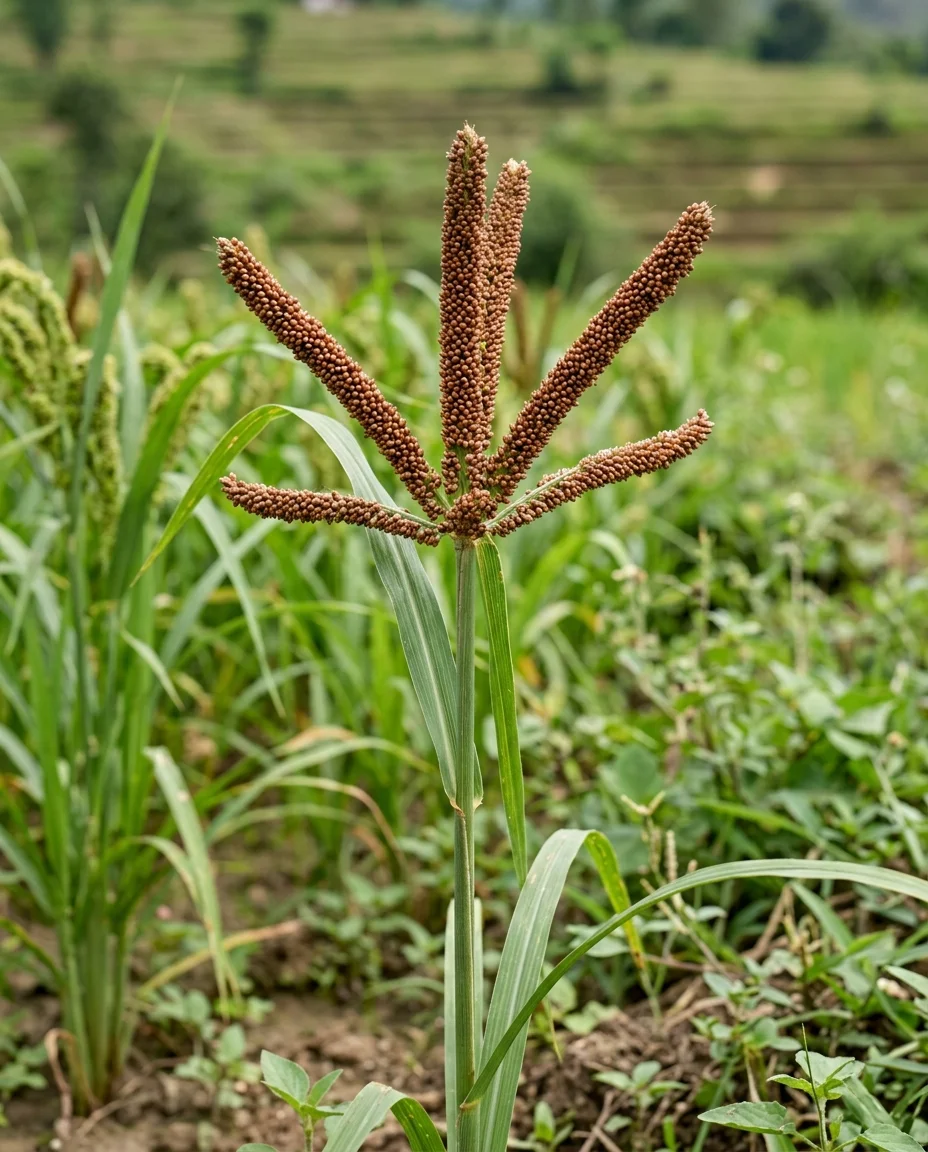
Finger millet (Eleusine coracana) is a small-seeded cereal grain belonging to the grass family. It is cultivated in parts of Africa and Asia, including Nepal, where it is commonly known as kodo.
The plant gets its English name from its distinctive seed heads, which spread outward from the top of the stalk in a shape resembling fingers. Its small, round grains are commonly reddish-brown, although colour can vary between varieties.
Finger millet is one of several crops known collectively as millets. Other millet species include foxtail millet, little millet, pearl millet, and kodo millet in the strict international botanical sense.
An important naming distinction: In Nepal, the crop commonly called kodo is finger millet, Eleusine coracana. In international agricultural terminology, kodo millet can refer to a different species, Paspalum scrobiculatum. The two names should not be treated as interchangeable in scientific or nutritional information.
In Nepali food culture, kodo is valued for its versatility. The grain can be stored, cleaned, cooked, or ground into flour for traditional household preparations.
Kodo in Nepal: A Traditional Food and Farming Crop
Kodo has a long history in Nepal’s agricultural landscape. It is particularly associated with hill and mountain farming communities, where farmers have traditionally cultivated different grains according to local soil, rainfall, elevation, and growing conditions.
Finger millet is suitable for several farming environments and can be grown in areas where growing rice may be difficult. Unlike paddy rice, it does not require standing water throughout the growing season.
For many households, kodo has served two important purposes: providing grain for family meals and contributing to household income when surplus grain or processed products can be sold.
The crop is also part of a wider tradition of growing, harvesting, drying, cleaning, and processing food at home. These practices reflect generations of agricultural knowledge passed between family members and communities.
Although food preferences and farming methods continue to change, kodo remains an important part of Nepal’s traditional food heritage.
Why Is Kodo Important in Nepal?
The importance of kodo goes beyond its role as a source of food. It connects agriculture, traditional cooking, local knowledge, and household food choices.
For generations, farmers have grown grains that suit their surroundings and available resources. Kodo became part of this system because it can be cultivated under suitable rain-fed conditions and processed into several types of food.
Kodo dhido is one of the best-known dishes associated with the crop. Kodo flour can also be used to prepare roti, haluwa, and other local or adapted recipes.
In some communities, traditional grains were once associated mainly with rural life and modest household meals. Today, interest in traditional foods has helped bring kodo to urban kitchens and restaurants as well.
This renewed interest creates opportunities to preserve local food traditions while helping more people understand the agricultural crops behind them.
When Is Kodo Cultivated in Nepal?
Finger millet is commonly grown during the rainy growing season in Nepal. The exact planting and harvesting calendar varies according to elevation, local climate, rainfall, variety, and farming practices.
Farmers generally plan sowing so that the crop has enough time to establish, grow, produce seed heads, and mature before harvest.
The time required for maturity is not identical for every variety. Some varieties mature earlier than others, so locally recommended planting dates and agricultural guidance are more reliable than assuming a single growing period applies throughout Nepal.
Weather conditions also influence the crop. Timely rainfall, appropriate soil moisture, and good field management can help support healthy growth.
How Is Kodo Grown in Nepal?

Growing kodo involves several stages, from preparing the field to storing the harvested grain. Traditional methods vary between communities, but the basic process generally includes:
- Preparing the soil and removing unwanted vegetation.
- Sowing suitable finger millet seeds.
- Helping young plants establish.
- Managing weeds and monitoring crop growth.
- Harvesting mature plants.
- Drying, threshing, and cleaning the grain.
- Storing the grain or processing it into flour.
The best method depends on local conditions, the variety being grown, and the resources available to the farmer.
Preparing the Field
Before sowing, farmers prepare the field to provide a suitable environment for seed germination and early growth. Soil may be loosened, and weeds or unwanted vegetation removed.
Because finger millet seeds are small, a reasonably fine seedbed can help with sowing. The field should also have suitable drainage for the local conditions.
Kodo does not need the flooded conditions associated with paddy rice. However, this does not mean that the crop can grow successfully without adequate moisture. Germination and crop development still depend on appropriate water and soil conditions.
Sowing Kodo Seeds
Finger millet seeds are small and should be handled carefully during sowing. Farmers may use locally established sowing methods, including broadcasting or other methods recommended for the variety and farming system.
Seeds are generally covered lightly rather than buried too deeply. Appropriate sowing depth and spacing can influence how well the seedlings emerge and establish.
The timing of sowing is also important. Farmers commonly use local weather patterns and agricultural experience to decide when conditions are suitable.
Caring for the Growing Crop
After sowing, the field needs to be monitored as the plants develop.
Weed management is an important part of crop care because unwanted plants can compete with finger millet for available resources. Farmers may also need to monitor crop health and respond to problems affecting plant growth.
Suitable soil management, timely weeding, and appropriate moisture conditions can support crop development. The precise practices needed will depend on the location and farming method.
Local agricultural extension services are a useful source of advice about varieties, planting dates, crop protection, and other cultivation decisions.
Harvesting Finger Millet

Finger millet is harvested when the plants and grains reach maturity. The timing varies according to the variety and growing environment.
Traditional harvesting may involve cutting mature plants using a sickle or another suitable tool. Careful handling can help reduce the loss of small grains during harvesting and transport.
After harvesting, the crop is dried as needed before further processing. Proper drying is important for reducing moisture before storage, while the grain must be protected from contamination and pests.
Cleaning, Processing, and Storing Kodo

Once harvested and dried, the grain needs to be separated from unwanted plant material. Traditional cleaning methods may include threshing, sorting, and winnowing.
In some Nepali households, traditional tools such as the dhiki have been used for processing grain. Modern milling equipment can make cleaning and flour production easier, although methods differ from one household and community to another.
Clean, adequately dried grain can be stored for later use. Storage conditions matter: grain should be protected from moisture, insects, rodents, and contamination.
Kodo can be kept as grain or ground into flour. The flour can then be used for dhido, roti, haluwa, and other preparations.
Traditional Kodo Foods in Nepal
Finger millet is a versatile grain that can be prepared in several ways. The exact dishes vary according to local traditions, family preferences, and the form of the grain or flour available.
Traditional and adapted preparations include:
- Kodo dhido
- Kodo roti
- Kodo haluwa
- Porridge and other homemade dishes
- Kodo-based noodles and other modern products
- Other recipes using kodo flour
These foods show how one crop can be used in different ways rather than being limited to a single dish.
Kodo Dhido

Kodo dhido is one of the most recognisable foods associated with finger millet in Nepal. It is prepared using kodo flour and is traditionally served as part of a meal with side dishes.
Depending on the household, these may include lentils, cooked vegetables, leafy greens, pickles, curd, or other accompaniments.
For many people, dhido is connected with memories of family meals, rural life, and traditional food preparation. The dish also illustrates how locally grown grains have supported household cooking for generations.
Today, kodo dhido can be enjoyed in rural homes, urban kitchens, and restaurants serving Nepali cuisine.
Kodo Roti and Haluwa

Kodo flour can be used to prepare roti and haluwa, although recipes and preparation methods vary.
The texture, taste, and handling of the flour can differ from those of wheat flour. Some recipes combine kodo flour with other ingredients to achieve a preferred texture or flavour.
These dishes provide additional ways to use finger millet in everyday meals and traditional cooking.
Kodo Noodles and Modern Products
Kodo flour is also used in some modern products, including noodles and packaged foods. However, the nutritional value of these products depends on their full ingredient list, processing methods, and serving size.
A product containing kodo flour is not automatically more nutritious than every alternative. Checking the ingredient list and overall nutritional information can help consumers make informed choices.
Is Finger Millet Nutritious?

Finger millet provides carbohydrates, plant protein, dietary fiber, and several minerals. Its exact nutritional composition depends on the variety, growing conditions, processing method, and source of the data.
It can contribute to a varied diet, particularly when eaten alongside foods from other food groups.
Finger millet should not be confused nutritionally with every other type of millet. Different millet species have different nutrient profiles, so nutrition figures for Paspalum scrobiculatum, for example, should not automatically be used to describe Eleusine coracana.
The overall nutritional value of a meal also depends on how the grain is prepared and what it is eaten with.
Potential Benefits of Finger Millet
Finger millet can contribute useful nutrients to the diet. Its potential benefits should be understood as part of overall eating patterns rather than as guaranteed health effects from eating one food.
1. Provides Dietary Fiber
Finger millet contains dietary fiber, which is an important component of a balanced diet. Adequate fiber intake supports normal digestive function.
The amount of fiber in a meal depends on the ingredients, processing, and portion size. People who are increasing their fiber intake may find it helpful to do so gradually and drink adequate fluids.
2. Provides Energy
Like other cereal grains, finger millet contains carbohydrates that the body uses as an energy source.
Its contribution to energy intake depends on the amount eaten and how it is prepared. Dhido, roti, and other grain-based foods can form part of meals alongside vegetables and sources of protein.
3. Contributes Plant Protein
Finger millet contains plant protein, which contributes to daily protein intake. However, it should not necessarily be relied upon as the only protein source in a meal.
Eating it alongside foods such as lentils, beans, dairy products, nuts, or seeds can help provide a wider range of nutrients.
4. Provides Minerals
Finger millet contains several minerals, including calcium, magnesium, and iron, although the amounts vary with the grain and source.
Minerals are needed for normal body functions. The amount the body absorbs can also depend on the wider diet and the way food is prepared.
A varied diet remains important even when a grain contains useful minerals.
5. Adds Variety to Everyday Meals
One practical advantage of finger millet is that it provides an alternative to commonly eaten grains such as rice and wheat.
Using different grains can make meals more varied and help preserve traditional food knowledge. Kodo does not need to replace every other grain to have a useful place in the diet.
Is It Good to Eat Kodo Every Day?
Kodo can be included regularly in a balanced diet, but whether daily consumption is suitable depends on a person’s overall eating pattern, portion sizes, nutritional needs, and health circumstances.
Eating a variety of foods is generally more useful than depending on a single grain. Kodo can be served with lentils, vegetables, dairy products, or other foods to create a more varied meal.
People who have specific medical conditions or dietary requirements may need individual guidance from a qualified health professional.
There is no need to assume that eating kodo every day will automatically produce a particular health outcome. The overall quality and balance of the diet matter more than any single food alone.
Kodo Flour: How Healthy Is It?

Kodo flour is made by grinding finger millet grain and can be used in a range of traditional recipes.
Its nutritional characteristics depend partly on how the grain is processed. Flour produced from whole grain may retain different proportions of the original grain components compared with more heavily processed products.
Kodo flour can be used for dhido, roti, haluwa, and other dishes. As with any grain-based ingredient, portion size and the other ingredients in the meal influence the meal’s overall nutritional value.
Kodo flour is a food ingredient, not a medicine. It should not be treated as a cure for diabetes, digestive problems, or other medical conditions.
Kodo and Traditional Nepali Food Culture
Kodo represents more than a crop. It is part of Nepal’s agricultural knowledge, food traditions, and household cooking practices.
Traditional farming involves a series of tasks, from sowing and crop care to harvesting, drying, cleaning, and processing. In many communities, knowledge of these practices has been passed down through families and generations.
Foods such as kodo dhido demonstrate how a locally grown crop becomes part of everyday meals. The use of traditional tools and household processing methods also reflects the relationship between farming and cooking.
As lifestyles change, traditional grains may be prepared less frequently in some households while gaining renewed interest in others. Restaurants and home cooks have found new ways to present traditional foods alongside familiar recipes.
Preserving knowledge about kodo can help keep these food traditions visible while allowing recipes and farming practices to adapt to changing needs.
Finger Millet Farming and Sustainability
Finger millet can be a useful crop in farming systems where local soil, climate, rainfall, and varieties are suitable.
In Nepal, the crop has traditionally been grown in different hill and mountain environments. Its role in rain-fed agriculture can provide farmers with another cereal option alongside other crops.
However, no crop is suitable for every location. Productivity and resilience depend on the variety, soil conditions, rainfall, crop management, and other local factors.
Maintaining traditional crops can help preserve agricultural diversity and local knowledge. Where markets and household demand exist, finger millet may also support income through grain sales or processed products.
Sustainable farming decisions should be based on local conditions and practical agricultural guidance rather than broad claims that one crop is always better than another.
Finger Millet vs Rice
Finger millet and rice are both cereal grains, but they differ in their growing requirements, appearance, and common culinary uses.
Rice is widely cultivated in irrigated and rain-fed systems, including paddy fields. Finger millet can be grown in suitable well-drained fields and is particularly associated with traditional farming in Nepal’s hills and mountains.
The grains also have different culinary characteristics. Rice is commonly cooked as individual grains, while finger millet flour is often used for dhido and other preparations.
Neither grain is universally superior in every situation. Their nutritional contributions depend on the variety, processing, serving size, and foods eaten alongside them.
Both can have a place in a varied diet, depending on local availability and personal preferences.
Finger Millet vs Other Millets
Millets are a group of different cereal crops rather than a single species. Finger millet, foxtail millet, little millet, pearl millet, and kodo millet are examples of distinct crops within this group.
They differ in plant appearance, growing conditions, grain characteristics, nutritional composition, and traditional uses.
In Nepal, the grain commonly called kodo is finger millet. In international botanical terminology, kodo millet usually refers to Paspalum scrobiculatum. Keeping these names distinct helps readers identify the correct grain when researching cultivation, recipes, and nutrition.
No single millet is best for every purpose. The choice depends on the local crop, recipe, availability, and individual preferences.
Possible Disadvantages of Finger Millet
Finger millet can be part of a balanced diet, but several practical considerations are worth keeping in mind.
Dietary variety: Eating only one grain can make it harder to obtain the full range of nutrients provided by a varied diet. Kodo is best considered one of several possible grain choices.
Digestive adjustment: People who suddenly increase their intake of fiber-rich foods may experience digestive discomfort. Increasing fiber gradually and drinking enough fluids may help.
Mineral absorption: Finger millet contains naturally occurring compounds such as phytates, which can reduce the absorption of certain minerals. Food preparation and the overall diet influence the nutritional picture.
Product ingredients: Packaged products made with kodo flour can contain added salt, sugar, fat, or other ingredients. Their nutritional value depends on the full product rather than the presence of kodo alone.
Individual needs: People with specific medical conditions or dietary restrictions should consider their own nutritional needs and seek professional advice when necessary.
These considerations do not mean that finger millet should be avoided. They are reminders that preparation, variety, and the overall diet all matter.
Frequently Asked Questions About Kodo
What is kodo?
In Nepal, kodo commonly refers to finger millet (Eleusine coracana), a traditional cereal crop used for foods such as dhido, roti, and haluwa.
What is finger millet?
Finger millet is a cereal grain known scientifically as Eleusine coracana. It is cultivated in parts of Africa and Asia, including Nepal.
What is kodo called in Nepal?
The crop is commonly called kodo in Nepal. Local names and pronunciation can vary by region and community.
What is kodo used for?
Nepalese kodo, or finger millet, is used as a grain and ground into flour for foods such as dhido, roti, haluwa, and other traditional or adapted recipes.
Is kodo a millet?
Yes. The crop known as kodo in Nepal is finger millet, which belongs to the wider group of millet crops. In international terminology, however, “kodo millet” can refer specifically to a different species, Paspalum scrobiculatum.
What is kodo dhido?
Kodo dhido is a traditional Nepali dish prepared using finger millet flour. It is often served with lentils, vegetables, pickles, curd, or other side dishes.
Where is kodo grown in Nepal?
Finger millet is grown in suitable agricultural areas across Nepal, particularly in hill and mountain farming environments. Local growing conditions determine which varieties and cultivation practices are appropriate.
How long does kodo take to grow?
The time required for finger millet to mature depends on the variety, altitude, weather, and farming practices. Farmers should follow local agricultural recommendations for planting and harvesting.
Is kodo healthy?
Finger millet provides carbohydrates, plant protein, dietary fiber, and several minerals. It can be part of a balanced diet, but no single grain provides everything the body needs.
Can kodo be eaten every day?
Kodo can be included regularly in a varied diet. Appropriate portions depend on individual needs, and it is generally useful to eat a range of grains and other foods.
Conclusion
Finger millet, traditionally known as kodo in Nepal, remains an important link between agriculture, traditional food, and local knowledge.

From preparing fields and growing the crop to harvesting, cleaning, storing, and grinding the grain, kodo has traditionally involved a range of farming and household practices. The resulting grain and flour can be used for dhido, roti, haluwa, and other preparations.
Finger millet also contributes carbohydrates, protein, dietary fiber, and minerals to the diet. Its value is best understood as part of a varied eating pattern rather than as a special remedy or replacement for every other grain.
As interest in traditional foods continues, kodo offers an opportunity to preserve Nepali culinary heritage while introducing more people to the grains grown and enjoyed in the country.
Also read: Soybean (Bhatmas): Health Benefits, Uses and Cultivation


